
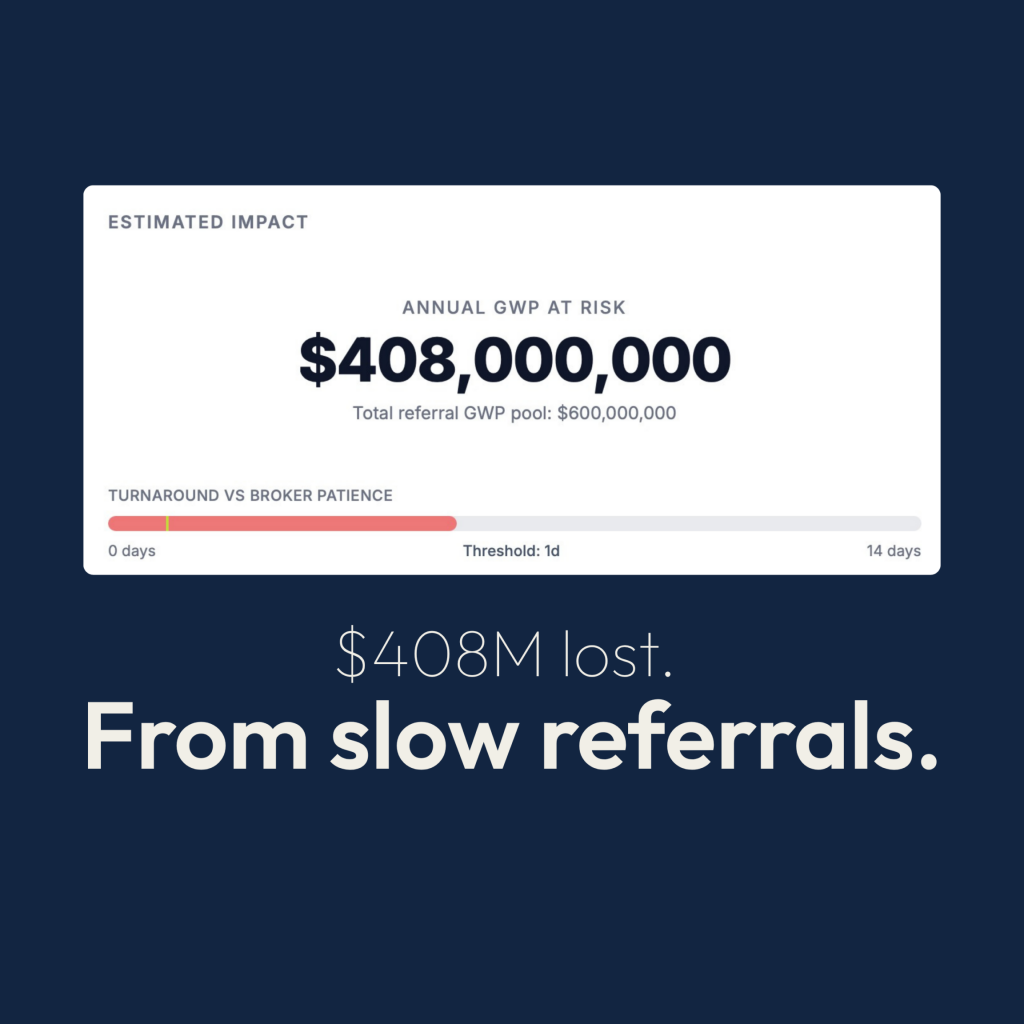
Move the sliders above to model your own submission flow.
Adjust volume, premium size, turnaround time to see how quickly deals drop off. Most teams underestimate how fast brokers move when responses lag.
This isn’t theoretical. Even a one-day delay can materially impact bind rates and revenue.
What is referral leakage in underwriting?
Referral leakage is the loss of premium that occurs when brokers move on due to slow underwriting response times. When referral turnaround exceeds broker patience thresholds, bind rates drop and deals are lost.
How the referral leakage calculator works
This calculator estimates lost GWP based on five factors:
- Monthly referral volume
- Average premium per referral
- Referral turnaround time
- Broker patience threshold
- Bind rate within threshold
It models how delays impact broker behaviour and calculates:
- Annual GWP at risk
- Monthly premium leakage
- Cost per day of delay
- Potential GWP recapture from faster turnaround.
This is where accelerating referral decisioning becomes critical, and where tools like the Underwriting Workbench enable faster, data-driven underwriting.
Key Insight
Reducing referral leakage isn’t just about awareness. It requires the ability to act on submissions faster, with better data and less manual friction.
FAQ's
What is referral leakage in insurance?
Referral leakage is the loss of potential premium caused by delays in underwriting responses, leading brokers to place business elsewhere.
How does referral turnaround impact bind rates?
Faster turnaround increases the likelihood of winning business, while delays reduce broker engagement and conversion.
How can insurers reduce referral leakage?
By accelerating underwriting decisions, improving data access, and reducing manual bottlenecks in the referral process. This is where platforms like the Underwriting Workbench help underwriters respond faster and convert more referrals into bound business.